
← All articles
Creative testing & strategy
How Often Should You Refresh Your Facebook and Instagram Video Ads to Prevent Ad Fatigue?
By VydioAds · · 14 min read
Creative testing & strategy
By VydioAds · · 14 min read
Review Meta video ads weekly, but refresh based on evidence—not a fixed expiry date. Learn the warning signs, frequency limits, testing workflow and creative planning that help small businesses manage ad fatigue.
Review Facebook and Instagram video-ad performance weekly as a practical operating habit, but refresh the creative when sustained performance deterioration supports it—not simply because the ad is seven, fourteen or thirty days old. Meta does not prescribe a universal refresh interval or a single frequency threshold. Rising frequency together with weaker response and worsening qualified cost per result can indicate fatigue; first rule out tracking, offer, website, audience and auction changes. Prepare fresh hooks and genuinely different concepts ahead of time, test them under comparable conditions, and keep a profitable winner running while the evidence still supports it.
An ad can look old to the person who made it and still be useful to a customer seeing it for the first time. Another video can feel fresh in your editing folder while the same small audience has already seen it repeatedly. That is why refreshing Facebook and Instagram video ads is a performance decision, not a calendar ritual.
The practical question is not how quickly you can replace a file. It is whether the current message is losing effectiveness with the people receiving it, whether a different creative approach could help, and whether you have enough evidence to make that judgment. A small business also needs a refresh process that does not consume its entire media budget or interrupt delivery unnecessarily.
This guide explains creative fatigue, frequency, sensible review rhythms, diagnostic signals and a repeatable replacement workflow for Facebook Feed, Instagram Feed and Reels campaigns. It is written for ecommerce stores, local service businesses and small marketing teams running paid Meta video ads—not as a guide to how often to post organic Reels.
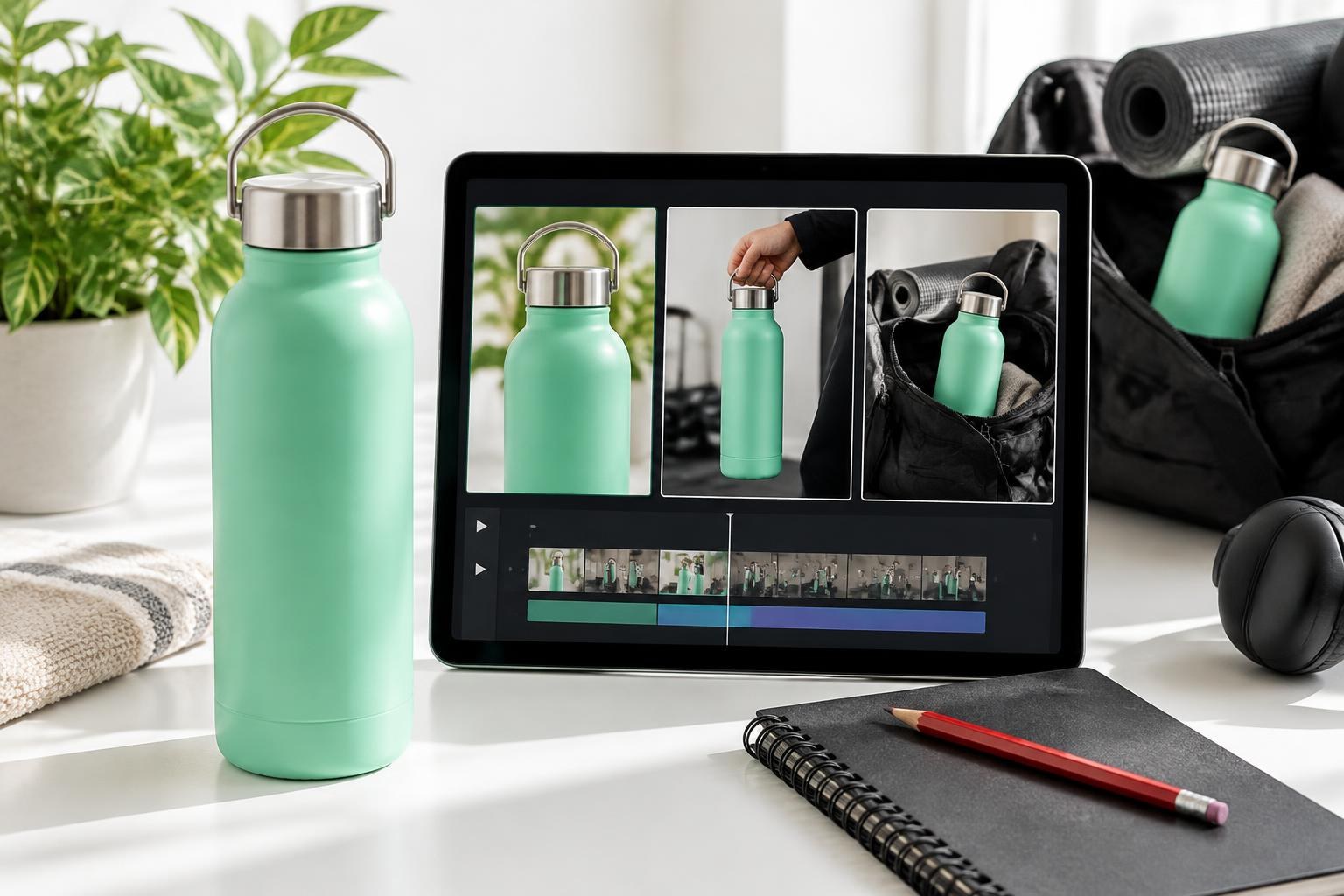
Editorial scope: published October 26, 2026. VydioAds sells the creative-production packages shown below. Official Meta sources support the reporting and platform concepts cited; our planning cadence and examples are editorial recommendations, not Meta rules, performance benchmarks or documented customer results. The generated featured image illustrates creative variation. Policies, reporting features and placement requirements can change.
Ad fatigue is a decline in response associated with repeated exposure to the same advertising creative. It is different from an ad that never communicated the offer well in the first place.
Meta describes creative fatigue as repeated exposure to the same creative that can reduce engagement and increase cost per result. Ads Manager may provide creative-fatigue recommendations for eligible ad sets. Availability depends on the feature and account conditions; the absence of a warning does not prove that an ad is healthy.
Audience saturation is related but not identical. A delivery system may repeatedly reach a relatively small group because of targeting, budget, eligibility or the available audience. A new video may help with familiarity, but it does not automatically create more potential customers or repair an overly narrow market.
An ad with a confusing first frame, an uncompetitive offer or a broken destination can underperform immediately. Calling that fatigue skips the actual diagnosis. Look for deterioration relative to a useful baseline, rather than using fatigue as a label for every disappointing campaign.
Meta Business Help: Creative fatigue recommendations in Ads Manager
Use a review schedule to create discipline and a performance trigger to decide whether to replace the creative. The two are not the same.
Our practical starting point is a weekly structured review of established campaigns, with routine checks for broken tracking, rejected ads and obvious spending anomalies. A weekly review does not mean a weekly creative replacement. It means you deliberately examine comparable evidence rather than reacting whenever a dashboard turns red.
Keep production ready ahead of need. A rolling two-to-four-week creative planning cycle can be useful for a small team coordinating briefs and approvals. That is a suggested organization rhythm, not a claim that every ad lasts two to four weeks. Some ads can remain useful longer; others need a change sooner because an offer expires or performance deteriorates.
For small audiences or heavily funded promotions, inspect delivery patterns more closely. For low-volume campaigns, a longer comparable observation window may be necessary. Account for delayed conversions and avoid treating a quiet afternoon as a statistically reliable result. Choose a cadence that fits the spend, conversion cycle and operational risk.
Ask whether the primary result is still economically acceptable, whether the trend is sustained and whether creative familiarity is a plausible explanation. Preserve a winner when the answer remains favorable.
An expired promotion, wrong price, unavailable product or inaccurate claim should be corrected regardless of performance. This is an accuracy decision, not an ad-fatigue test.
Frequency is an estimated average: impressions divided by reach within the selected reporting scope and date range. It is context, not an automatic replacement instruction.
If an ad records 12,000 impressions and an estimated reach of 4,000, the arithmetic is an average frequency of 3 for that period. These invented figures illustrate the calculation; they do not define a safe frequency. An average also hides distribution: some reached people may see the ad once while others see it more often.
A frequency of 3 over a week is not the same exposure pattern as 3 over a month. Campaign-level frequency is not interchangeable with one ad's frequency. Always state the date range and scope when recording the number, and compare equivalent views of the campaign.
A high frequency can coexist with useful results, especially when someone needs reminders before making a considered purchase. A lower frequency does not guarantee that the creative is persuasive. Read exposure alongside qualified outcomes, response trends and the business context instead of stopping an ad because it crossed an internet benchmark.
A cluster of consistent signals is more useful than one isolated metric. Start with the business outcome, then use attention and delivery measures to investigate.
For purchase campaigns, inspect attributed purchases and cost per purchase, then compare with actual store orders, cancellations and returns. For lead campaigns, inspect cost per qualified enquiry and eventual bookings—not only the cheapest form completion. Use the goal that made the campaign worth running.
Possible warning signs include sustained worsening cost per qualified result, weaker relevant click response, declining early-view or engagement signals, and rising frequency while reach expands less. These trends are consistent with fatigue, but none proves that familiarity caused the change. Metric definitions and available reporting columns vary.
CPM, the cost per thousand impressions, adds auction context. If acquisition cost rises alongside a large CPM increase while response rates remain similar, distribution cost may be a major cause. If clicks remain healthy but website conversion deteriorates, look downstream. The right response could be website repair or offer clarification rather than a new hook.
Keep a brief log of dates, spend, audience, objective, attribution setting, creative changes and commercial events. A trend chart without that context can make an unrelated budget change look like creative fatigue.
A fresh video is not a universal repair tool. Check the customer journey and the campaign conditions first.
Tracking: verify that the intended conversion fires once and that recent site changes did not interrupt measurement. Look for reporting delays and changes to conversion or attribution definitions. Do not compare two periods that count different actions as a result.
Destination: test the relevant product or booking page on a phone. Check loading, stock, prices, forms, payment steps and the exact product variant in the ad. A popular video can send customers into a broken checkout; making another video leaves that failure in place.
Commercial context: record changes in shipping cost, discounts, availability, competitor offers and seasonality. A holiday promotion and a normal week may not be comparable even if the same audience and video are used.
Delivery: note edits to budgets, bidding, audiences and placements, and check whether the ad set is learning. Separate an unexplained performance decline from one that followed a deliberate campaign change. If several ads worsen together, investigate shared conditions rather than declaring all creative tired.
Use the least disruptive action that addresses the evidence. Avoid both replacing profitable creative too early and running an inaccurate or unproductive ad indefinitely.
Keep the current ad when qualified results remain acceptable and there is no material accuracy issue. Rising frequency alone is not enough to discard it. Prepare alternatives while continuing to monitor.
Test a challenger when exposure is accumulating and multiple response signals weaken, after checking other causes. Define the question before producing the replacement; a plausible fatigue diagnosis is still a hypothesis.
Correct or pause inaccurate creative immediately. If a campaign exceeds a pre-set affordable loss limit, act according to your budget plan even when the cause is uncertain. Do not spend indefinitely to obtain a perfect fatigue diagnosis.
A meaningful refresh gives the viewer a different reason to pay attention. A cosmetic export can remain essentially the same advertisement.
Start with an opening hypothesis. Show the product in use rather than opening with a logo. Address a specific customer problem instead of listing features. Answer a common objection before presenting the offer. Each change should express a clear message you can describe in the brief.
Change the evidence when it is useful: a genuine demonstration, a founder explanation, a real product detail or an authorized customer quotation. Do not fabricate testimonials or use generated scenes as proof of product performance. Novelty is not a justification for a misleading claim.
Adjust structure and pacing where comprehension needs help. Tighten a slow introduction, make captions readable or move a relevant detail earlier. A new soundtrack or background color can be a valid creative choice, but do not assume it will solve fatigue if the promise and viewing experience remain unchanged.
Keep a learning record. Name versions by the hypothesis—product-first, objection-first or founder explanation—rather than final-v7. This makes the next brief more useful and helps avoid paying repeatedly for the same idea.
A small batch can explore different messages without requiring five unrelated productions. The following reusable-bottle example is hypothetical, not a claim about measured winners.
Concept 1: product-first. Show the exact bottle and its available color immediately, then one verified detail. Hypothesis: immediate product clarity attracts more relevant viewers than a general lifestyle introduction.
Concept 2: use-context. Use genuine footage of the bottle being packed into a bag. Hypothesis: a recognizable routine helps customers understand where the item fits. Avoid implying waterproofing or leak performance unless supported.
Concept 3: detail-led. Highlight the real cap or another verified construction feature with an accurate close-up. Hypothesis: answering a product question gives interested buyers a stronger reason to click.
Concept 4: founder explanation. A real authorized person explains why the product was designed and what it does. Hypothesis: a credible human introduction increases qualified interest. Do not create a synthetic customer pretending to report a real experience.
Concept 5: objection-led. Address a question the business genuinely hears, using truthful information and any necessary limitations. Hypothesis: removing uncertainty is more useful than adding another decorative montage.
These are production options, not a recommendation to run five ads simultaneously on every budget. Select the comparison your available spend can support. Keep the offer and destination consistent when the goal is to compare messages.
Decide what is changing, what stays the same and how you will judge the result before you launch the challenger.
Write a test question such as: does a product-first opening produce more qualified purchases than our current opening? Keep product, price, destination, measurement and other relevant conditions comparable where practical. If you change the audience, discount, presenter and hook together, you are comparing two campaign packages, not isolating one creative variable.
Meta's A/B testing tools support comparisons that separate audiences to reduce overlap between versions. Use the supported experiment workflow where suitable and available. Uploading multiple ads to an ordinary ad set does not guarantee equal spend or randomized exposure; delivery may favor one early.
Set a sustainable test budget and review criteria using your economics and typical conversion delay. There is no universal minimum number of days that proves a refresh worked. Low conversion volume may leave the test inconclusive, even if one video appears to have a better click-through rate.
Judge the challenger by the primary business outcome and customer quality. A new video that attracts cheaper curiosity clicks but fewer purchases is not necessarily an improvement. Save what you learned and use it to choose the next deliberate change.
Changing creative can affect delivery. Do not treat repeated ad edits as a free way to restart performance.
Meta describes a learning period in which delivery explores how best to optimize an ad set. Results can be less stable during this period. Significant edits, including creative changes in applicable circumstances, can cause an ad set to re-enter learning.
Plan the launch instead of repeatedly editing the only active video every time results fluctuate. Preserve a record of the previous version and settings. Use an appropriate controlled comparison where the account and campaign support it, while recognizing that adding new creative can still affect delivery.
Do not promise that duplicating an ad, opening a new ad set or changing one setting will preserve all prior learning. Those decisions have trade-offs. The right structure depends on the campaign, objective and budget; the practical lesson is to make intentional changes and allow evidence to develop.
Meta Business Help: Significant edits and the learning phase
Cold acquisition, warm retargeting and local campaigns can have different exposure patterns. Compare each against its own objective rather than applying one creative lifespan everywhere.
Cold acquisition: inspect qualified new-customer outcomes and whether delivery is reaching additional people. A video introducing an unfamiliar product may still be useful even when the business has used it for a long time. Test another customer angle rather than assuming age alone is the problem.
Retargeting: audiences can be smaller and already know the offer. A useful refresh may answer a remaining objection, explain delivery or clarify a feature instead of repeating the original introduction. Frequency can climb quickly, but reminders are not automatically wasteful; read actual results and user feedback.
Local services: the eligible geography may naturally limit reach. Show authentic staff, locations and relevant work, with permission. Refreshing creative cannot expand the service area the business actually serves or guarantee that every enquiry is suitable.
Seasonal promotions: accuracy has priority. Schedule the removal or correction of time-limited prices and offers. Prepare the next message before the promotion ends rather than stretching an expired offer because its previous results looked good.
Refresh the message and verify the actual placement. A new concept still needs usable framing, captions, audio and a readable call to action.
Use Meta's current Ads Guide for the chosen placement rather than relying on one generic Facebook video specification. Reels commonly calls for a vertical viewing experience; feed versions may need a different composition. Check the active placement requirements and preview the final creative before launch.
Keep essential text and product detail clear of interface overlays. Watch on a phone and confirm that captions are readable without covering the item. The core message should remain understandable without audio, while any music or voice must be appropriately licensed and accurate.
Reframe from a clean master rather than cropping away the reason the ad works. A close detail in one version may become invisible in another shape. Changing aspect ratio is a placement adaptation; it is not, by itself, a genuinely new creative concept.
A before-and-after comparison is only useful when the result definition and reporting window remain comparable.
Record the attribution setting, selected conversion event and date range. Allow for the business's typical conversion delay. Compare similar periods where possible and mark promotions, budget changes and tracking edits in the notes.
Meta supports comparing attribution settings in reporting. That can help you understand why different views of the same campaign produce different reported outcomes. It does not mean every attributed purchase is incremental or that a before-and-after change proves the video caused it.
Reconcile platform reports with the business's own records, especially for qualified leads and bookings. Use attention metrics to investigate and business outcomes to decide. A modest number of observations may support a cautious next step without establishing a universal winner.
Keep creative production and paid media separate. Buy the amount of creative your testing plan can use, not the largest batch you can generate.
One prepared challenger can be more valuable than a folder of near-identical exports. If the available campaign spend can only support one meaningful comparison, focus on that. More videos do not automatically create better evidence, and a low-volume campaign can be fragmented by too many simultaneous tests.
VydioAds Growth is currently listed at $179 for five custom video ads, multiple creative concepts, hook variations for testing, one revision each and platform-ready files. It is a one-time creative-production package that can support a planned refresh batch—not five guaranteed winners or five campaigns managed on your behalf.
As illustrative arithmetic, $179 divided by five delivered ads is $35.80 per ad before applicable taxes and agreed extras. That is a package allocation, not your cost per customer. Platform ad spend, campaign management and measurement remain separate.
The $799-per-month Creative Subscription is another existing option for businesses with ongoing production needs. No fixed monthly quantity is stated; confirm scope before buying. Start with the volume and workflow your team can actually brief, review and test.
The short answers below summarize the decisions that matter most. There is no universal creative expiry date.
Not automatically. Review performance weekly as a practical habit, but keep accurate, economically useful creative running. Refresh when sustained evidence supports it or when the offer changes.
Not by itself. Specify the reporting window and scope, then read frequency alongside outcomes. An average of 3 in seven days and 3 in thirty days describe different exposure patterns; neither establishes a universal fatigue threshold.
It can remain useful while its message is accurate, delivery is permitted and outcomes justify the spend. A promotion or performance change may require action sooner. There is no single number of days that predicts every creative's lifespan.
A new opening is a useful hypothesis when early attention is the problem. It is not a guaranteed fix for audience saturation, an uncompetitive offer or a broken website. Test the change against a defined outcome.
Creative changes can be significant edits and can cause learning to restart in applicable circumstances. Review Meta's current guidance and campaign status instead of assuming every refresh preserves delivery.
Prepare enough distinct concepts for the tests your budget supports. A small business may begin with one challenger or a small planned batch. Do not run every prepared variation simultaneously unless the test design and spend justify it.
AI can help produce variations, but novelty alone does not establish better results. Protect product accuracy, use authorized material and test meaningful messages. AI does not remove the need for evidence or advertising review.
No. The packages described here provide creative production. Paid advertising spend, campaign management and performance measurement are separate; no sales, return-on-ad-spend or platform-approval guarantee is made.
Record the evidence before requesting another video. A short, consistent review helps distinguish fatigue from noise.
Confirm the objective, primary conversion, attribution setting and reporting window. Check tracking and the mobile destination. Review qualified cost per result, volume, frequency, reach and response trends. Note changes in budget, offer, audience, auction conditions and delivery status.
Decide keep, test or replace. For a test, write one hypothesis, choose a meaningful creative change, retain a comparable offer and destination, and set an affordable limit. Prepare accurate assets and verify placement requirements. Keep the current winner when the evidence still supports it.
The bottom line: review regularly, refresh deliberately and measure the business outcome. The goal is a repeatable learning process—not the fastest possible rotation of videos.
If your review points to a new message, VydioAds can produce the creative without an agency retainer. Bring the product, the current offer and the question you want the next ad to answer.
The Growth package below is a relevant starting point when you need multiple concepts and hook variations. Supply your website, suitable brand assets, campaign goal and creative direction through the online order form. Scripting, captions and platform-ready delivery are included in the listed scope.
Choose the Growth order button to continue to the existing brief and checkout, or compare all packages before buying. For one focused first test, Starter remains available at $49. No calls are required to place an order.
If you are still deciding what to test, join the newsletter below for new video-ad notes. Subscribing is separate from ordering and does not start a paid plan. Production prices, revisions, formats and listed turnaround are shown in the offer; applicable taxes and agreed extras may affect the total.
Newsletter
Get new ad notes in your inbox.
One short, useful email when we publish a new article. No calls, no pitches.
VydioAds creates fixed-price video ads for brands, businesses and creators. Explore VydioAds, see our production process, or compare the packages below.
VydioAds · Growth
Build a purposeful refresh batch with Growth: five custom video ads, multiple creative concepts and hook variations for testing. Share your product, current creative and the audience question you want to answer. We turn that brief into platform-ready creative you can review and launch.
Listed production price; applicable taxes and agreed extras may change the total. Platform ad spend and campaign management are separate. No sales or approval guarantee.
$179one-time
Listed turnaround: 5 business days.
VydioAds pricing
Fixed-price video ad packages start at $49. Select a package to send your brand and campaign goal online.
Starter
1 video ad
Delivered in 3 business days
Launch
3 video ads
Delivered in 4 business days
Growth
Most popular5 video ads
Delivered in 5 business days
Scale
10 video ads
Delivered in 6 business days
Pro
20 video ads
Delivered in 8 business days
Creative Subscription
MonthlyOngoing creative
Priority queue
The $49 Creative Test Drive
Put our scriptwriting, editing and motion design to work on one ad before you commit to more.
Need 25+ ads a month for variant testing?
Custom volume plans for brands and agencies running creative at scale.
Pick a package, send your brand, and get platform-ready video ads in days. No calls, no meetings.