
← All articles
Small business
Video Ads for Small Business: A Practical Guide to Formats, Briefs and Budgets
By VydioAds · · 11 min read
Small business
By VydioAds · · 11 min read
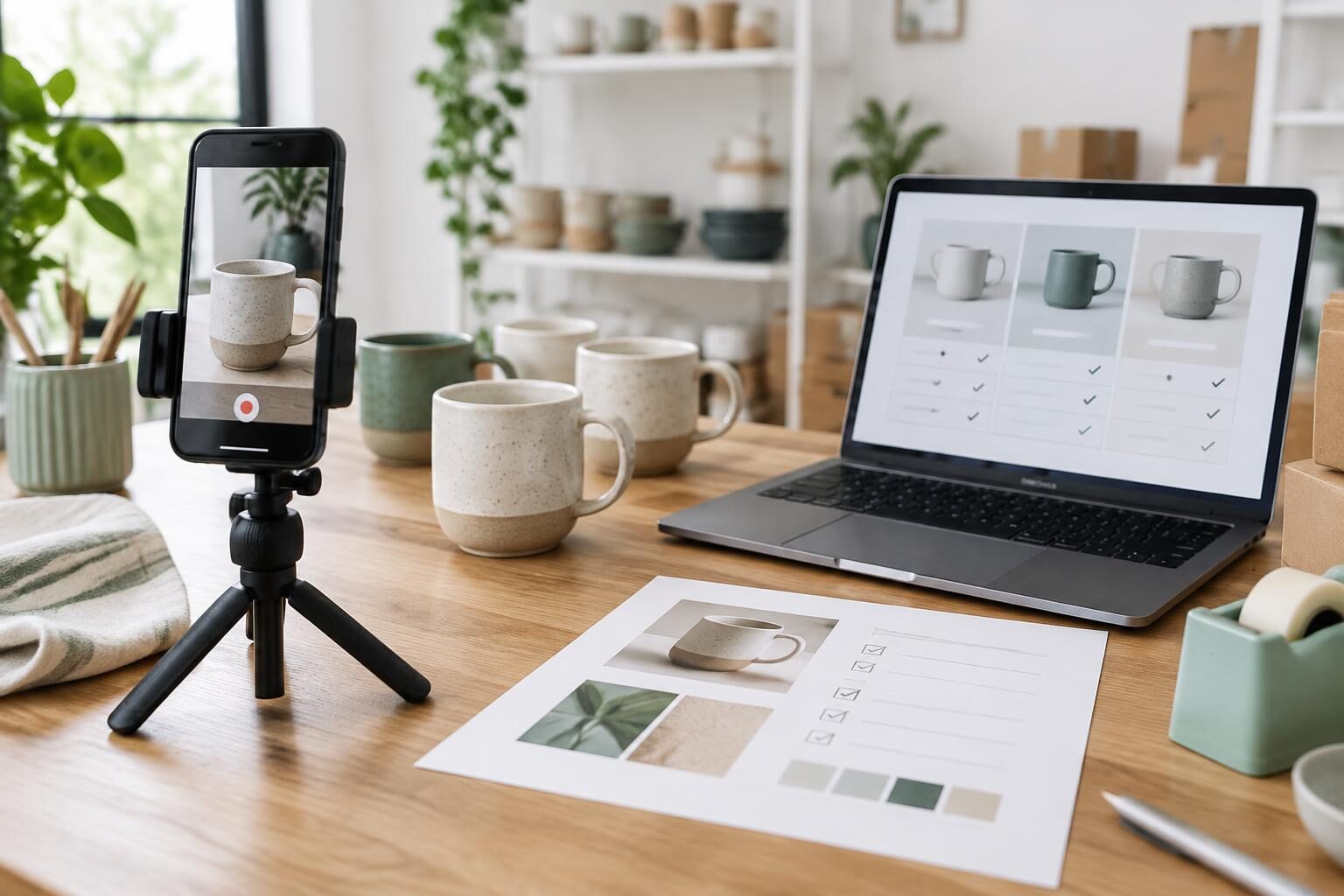
A plain-English guide to video ads for small businesses: which formats to choose, how to write a one-page brief, what a fixed-price package includes and what it does not.
A small business can start video advertising with one short vertical ad (15–30 seconds, 9:16) built around a single offer, a clear opening line, captions and one call to action. Write a one-page brief covering the product, the customer, the main benefit, proof you can support and where the viewer should go. Keep production cost and ad spend separate: production makes the video, while the platform charges to show it. Fixed-price packages make production cost predictable, but no package guarantees sales, and ad spend, campaign management and results tracking remain your responsibility unless you arrange them separately.
Most small businesses do not need a film crew to advertise with video. They need a short, clear ad that explains one thing to the right people on the platform those people already use. The hard part is usually not the camera; it is deciding what to say, preparing usable material and knowing what you are paying for.
This guide walks through the decisions in order: picking a format, writing a brief, preparing assets, understanding costs and comparing fixed-price production options. It is written for shop owners, local service providers, online stores and solo founders who want a realistic starting point.
Editorial scope: published October 20, 2026. VydioAds publishes this guide and sells the creative-production packages described below. Linked official resources support platform and advertising guidance. Examples are hypothetical planning illustrations, not customer results.
A video ad works best when it asks the viewer to do one thing. Decide that before thinking about style or length.
Common small-business goals include visiting a product page, booking an appointment, calling for a quote, visiting a location or joining an email list. Each implies a different call to action and a different landing page. An ad that tries to introduce the brand, announce a sale and recruit staff at the same time usually does none of them well.
Choose a single offer you can describe in one sentence: a product, a service, a seasonal promotion or a first-visit incentive. If you cannot explain it briefly, the viewer will not understand it in a few seconds of scrolling either.
For most small businesses, a 15–30 second vertical video (9:16) is the most flexible starting format because it fits TikTok, Instagram Reels, Facebook Reels and YouTube Shorts placements.
Square (1:1) and horizontal (16:9) versions remain useful for some feed and YouTube placements. Rather than producing three different ads, start with one strong vertical version and add other shapes once you know the message works. Check each platform's current specifications before exporting, because safe areas and length limits change.
Simple ad types suit small budgets well: a product demonstration, a problem-and-solution explainer, a before-and-after (only where it truthfully represents typical results), a short founder or staff introduction, or a promotion announcement. Pick the type that best shows why someone should choose you.
Design for sound off. Many people watch without audio, so on-screen captions and visual storytelling should carry the message on their own.
Short ads share a simple structure: open with something that earns attention, explain the value, then tell the viewer what to do next.
The first few seconds matter most. Lead with the problem your customer recognizes, the product in use or a clear statement of the offer. Avoid long logo intros. TikTok's own creative guidance stresses grabbing attention early and making content that feels native to the platform.
In the middle, show the product or service doing its job and state the main benefit in plain words. Finish with one specific action: shop now, book today, get a quote. Repeat it on screen as text.
A brief is the single most useful thing a small business can prepare. It saves revisions and keeps the ad accurate, whether you make it yourself or hire someone.
Include: your business name and website; the product or service being advertised; the customer you want to reach; the main benefit in one sentence; any proof you can genuinely support (certifications, guarantees you actually offer, real review quotes with permission); the offer and its terms; the call to action and destination link; the platform and format; and anything that must not appear or be said.
Add brand basics: logo file, colors, fonts if you have them and two or three ads or videos you like. Examples of tone are often more useful than adjectives like 'modern' or 'premium.'
Clear photos and short phone clips of your real product, location or team are often enough material for a capable short ad.
Shoot in good daylight, keep the camera steady and capture a few seconds of each subject. Include close-ups, the product in use and any packaging. Make sure you own or have permission to use every image, song and piece of footage.
If you have few assets, a producer can work from your website imagery and product photos, combining them with motion graphics and captions. Be cautious with generated or stock footage that could misrepresent what you actually sell.
Small businesses are held to the same advertising rules as large brands. Claims must be truthful, not misleading and supported by evidence.
Avoid exaggerated results, invented testimonials and before-and-after images that do not reflect typical outcomes. If you use endorsements or influencer content, disclose material connections clearly. When in doubt, describe what the product does rather than promising what it will achieve.
Video advertising has two separate costs. Production pays for making the ad. Ad spend pays the platform to show it to people.
Production can range from free (doing it yourself) to fixed-price services to agency retainers and full commercial shoots. Ad spend is set by you in each platform's ads manager through daily or lifetime budgets, and you can start small, pause and adjust.
Many small businesses set an overall marketing budget first, then decide how much goes to creative and how much to media. The SBA offers general guidance on planning a marketing budget around your revenue and goals.
A hypothetical example: a local bakery sets aside a modest monthly ad budget on Instagram, pays once for a single vertical promotion ad, runs it for two weeks to nearby audiences and checks whether profile visits and orders change. The production cost is fixed; the media spend is controlled day by day.
Fixed-price packages make production cost predictable. VydioAds lists its packages publicly so you can compare scope before ordering.
Starter ($49, one-time): one custom 15–30 second video ad, one format, one revision, script and captions, platform-ready file; listed turnaround 3 business days. Suited to a first test or a single promotion.
Launch ($119, three ads) and Growth ($179, five ads with multiple concepts and hook variations) suit businesses that want to compare different openings or offers. Scale ($299, ten ads) and Pro ($499, twenty ads) cover larger testing programs. The Creative Subscription ($799 per month, cancel anytime) is for brands running ads continuously.
What packages do not include: platform ad spend, setting up or managing ad campaigns, targeting, results tracking, or any guarantee of sales, reach or ad approval. Listed prices exclude applicable taxes and agreed extras. Plan for those separately.
Treat your first ad as a test. Run it long enough to gather meaningful data, then change one thing at a time.
Watch a few signals: how many people keep watching past the first seconds, how many click, and whether those clicks lead to the action you wanted. Use the platform's reporting plus your own sales or booking records. If viewers drop off early, try a new opening. If they click but do not buy, look at the offer and the landing page.
Once one message works, produce variations with different hooks or formats rather than starting from scratch. That is where multi-ad packages become useful.
Most underperforming small-business ads fail for predictable reasons.
Too many messages in one ad. A slow logo intro. No captions. A vague call to action. Sending clicks to a homepage instead of the relevant page. Claims you cannot support. Judging an ad after a day or two of spend. Avoiding these gets you most of the way to a competent first campaign.
VydioAds creates fixed-price video ads for brands, businesses and creators. Explore VydioAds, see our production process, or compare the packages below.
VydioAds · Starter
Send your website, available brand assets and campaign goal. We handle the script and creative production for one focused, platform-ready video.
Listed production price; applicable taxes and agreed extras may change the total. Platform ad spend and campaign management are separate. No sales or approval guarantee.
$49one-time
Listed turnaround: 3 business days.
VydioAds pricing
Fixed-price video ad packages start at $49. Select a package to send your brand and campaign goal online.
Starter
1 video ad
Delivered in 3 business days
Launch
3 video ads
Delivered in 4 business days
Growth
Most popular5 video ads
Delivered in 5 business days
Scale
10 video ads
Delivered in 6 business days
Pro
20 video ads
Delivered in 8 business days
Creative Subscription
MonthlyOngoing creative
Priority queue
The $49 Creative Test Drive
Put our scriptwriting, editing and motion design to work on one ad before you commit to more.
Need 25+ ads a month for variant testing?
Custom volume plans for brands and agencies running creative at scale.
Newsletter
Get new ad notes in your inbox.
One short, useful email when we publish a new article. No calls, no pitches.
Pick a package, send your brand, and get platform-ready video ads in days. No calls, no meetings.